
As energy demand rises, various innovations continue to be developed to provide more efficient energy sources while supporting sustainability.
One such innovation is environmentally friendly fuel, which is now being utilized across various sectors, from transportation to industry. Its presence plays a vital role in efforts to create a more modern energy system.
This article will cover various important topics, ranging from the types to the benefits of environmentally friendly fuel across different sectors. Read to the end for a more complete explanation!
Types of Environmentally Friendly Fuels
Essentially, environmentally friendly fuels are developed to meet energy needs by utilizing specific resources and through continuously evolving technology.
Each type of environmentally friendly fuel has different characteristics, raw materials, and uses, so their application can be tailored to the needs of various sectors. Here are some examples of widely used environmentally friendly fuels:
Bioethanol

Bioethanol is an eco-friendly fuel produced through the fermentation of sugars from plants such as corn, sugarcane, and wheat.
The International Energy Agency (IEA) notes that bioethanol is a biofuel that supports low-carbon transportation. The carbon released during its use is part of a short-term carbon cycle, as the feedstock plants absorb carbon dioxide during their growth.
Several studies have also shown that bioethanol can reduce CO₂ emissions over its life cycle by approximately 50–80% compared to gasoline.
Interestingly, bioethanol can also be produced from agricultural waste. Utilizing these raw materials helps optimize available resources while expanding the range of renewable energy options. It is no wonder, then, that bioethanol development continues in various countries as part of efforts to diversify energy sources.
Read also: 6 Ways to Conserve Energy with a Suitable Lifestyle
Biodiesel
Unlike bioethanol, biodiesel is a fuel produced from vegetable oils, animal fats, or used cooking oil that has undergone processing. This fuel is generally used as a diesel blend in diesel-powered vehicles and various heavy equipment in accordance with applicable standards.
In Indonesia, biodiesel is largely produced using palm oil due to the abundant availability of raw materials. Currently, biodiesel is utilized across various sectors, ranging from transportation, industry, and mining to power generation, as an alternative energy source.
Pyrolysis Oil from Plastic Waste
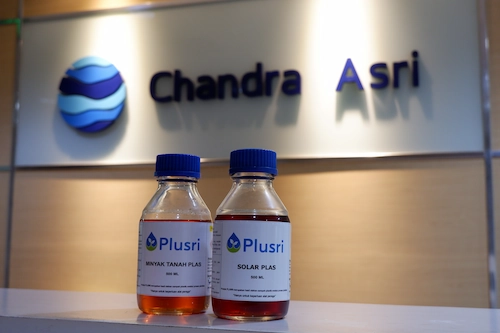
Did you know? It turns out that plastic waste can be used as fuel. One way to do this is by processing plastic into pyrolysis oil. For your information, pyrolysis is the process of heating a material at high temperatures without using oxygen. This process produces oil, charcoal, and gas.
Chandra Asri Group is one of the companies leading the effort to recycle plastic waste into alternative fuel.
Through IPST ASARI, the Chandra Asri Group has introduced “PLUSRI,” an initiative that utilizes pyrolysis technology to process plastic waste into an alternative fuel called pyrolysis oil. This innovation not only helps reduce waste generation but also supports the needs of small and medium-sized enterprises (SMEs) in the areas surrounding its operations.
In fact, since 2023, PLUSRI has been used as a blended fuel for the fleet of PT SCG Barito Logistics (SBL), a subsidiary of the Chandra Asri Group.
To date, tens of thousands of kilograms of plastic waste have been processed into tens of thousands of liters of PLUSRI oil. This collaboration also contributes to strengthening the green economy in the city of Cilegon and supports the realization of a circular economy within the community.
Green Hydrogen
Green hydrogen is a fuel produced through electrolysis, which is the process of separating water molecules into hydrogen and oxygen using electricity generated from renewable energy sources, such as solar, wind, or hydro power.
Not only is it used as fuel for fuel-cell vehicles, but green hydrogen also has the potential to be used as an energy source in the industrial sector, for power generation, and as an energy storage medium in the future.
Electricity

Electricity has become one of the most widely used energy sources to power electric vehicles (EVs). As technology advances, electric vehicles are now available in various types, ranging from passenger cars, buses, and trucks to motorcycles.
The use of electricity as an energy source is also increasingly being adopted across various sectors to support more efficient business operations.
One example is the initiative by the Chandra Asri Group, which operates two electric buses manufactured by Mobil Anak Bangsa (MAB) as part of its employee shuttle fleet. This initiative is part of the company’s commitment to supporting more sustainable operations while promoting the use of electric vehicles within the industrial sector.
Read also: 6 Examples of Alternative Energy & Its Projects in Indonesia
Renewable Natural Gas
Renewable natural gas (RNG) is a fuel produced by purifying biogas derived from the decomposition of organic materials, such as agricultural byproducts, livestock waste, and organic waste.
After purification, the methane content in RNG is increased to a level comparable to that of conventional natural gas, and it is ready for use as an energy source.
Given its characteristics, which are nearly identical to those of natural gas, RNG can be used as fuel for gas-powered vehicles, to meet energy needs in the industrial sector, and even for power generation.
In addition to providing an alternative energy source, renewable natural gas also supports the utilization of organic materials that still have practical value as part of the circular economy concept.
That concludes the information on the various types of environmentally friendly fuels that are continually being developed to support energy needs across various sectors.
As an environmentally conscious individual, you can also contribute by considering the use of vehicles powered by renewable energy sources as part of sustainable living.
Nowadays, there are many ways to help preserve the environment—even through the simplest and easiest actions. One such way is by joining an environmentally conscious community like Indonesia Asri.
As a member—known as a “Warga Asri”—you can take part in environmental initiatives and share educational content on topics ranging from reducing carbon emissions to waste management. Furthermore, you can enjoy fun games designed exclusively for the community and earn “Indonesia Asri Points” through various activities, which can then be redeemed for exclusive merchandise. Sign up now, and let’s take care of our Earth!
Read also: 9 Examples of Non-Renewable Energy You Should Know